
In manufacturing, industrial cranes are essential for lifting and moving heavy loads, improving workflow, and carrying out controlled handling operations. Selecting the right equipment from the outset makes better use of the available space, reduces unnecessary movements, and supports a safer operation.
Some of the benefits of using the right crane for each process include:
- Safer and more efficient material-handling operations.
- Better project and production times.
- Greater operating capacity within the work area.
- Lower costs associated with manual handling or unsuitable equipment.
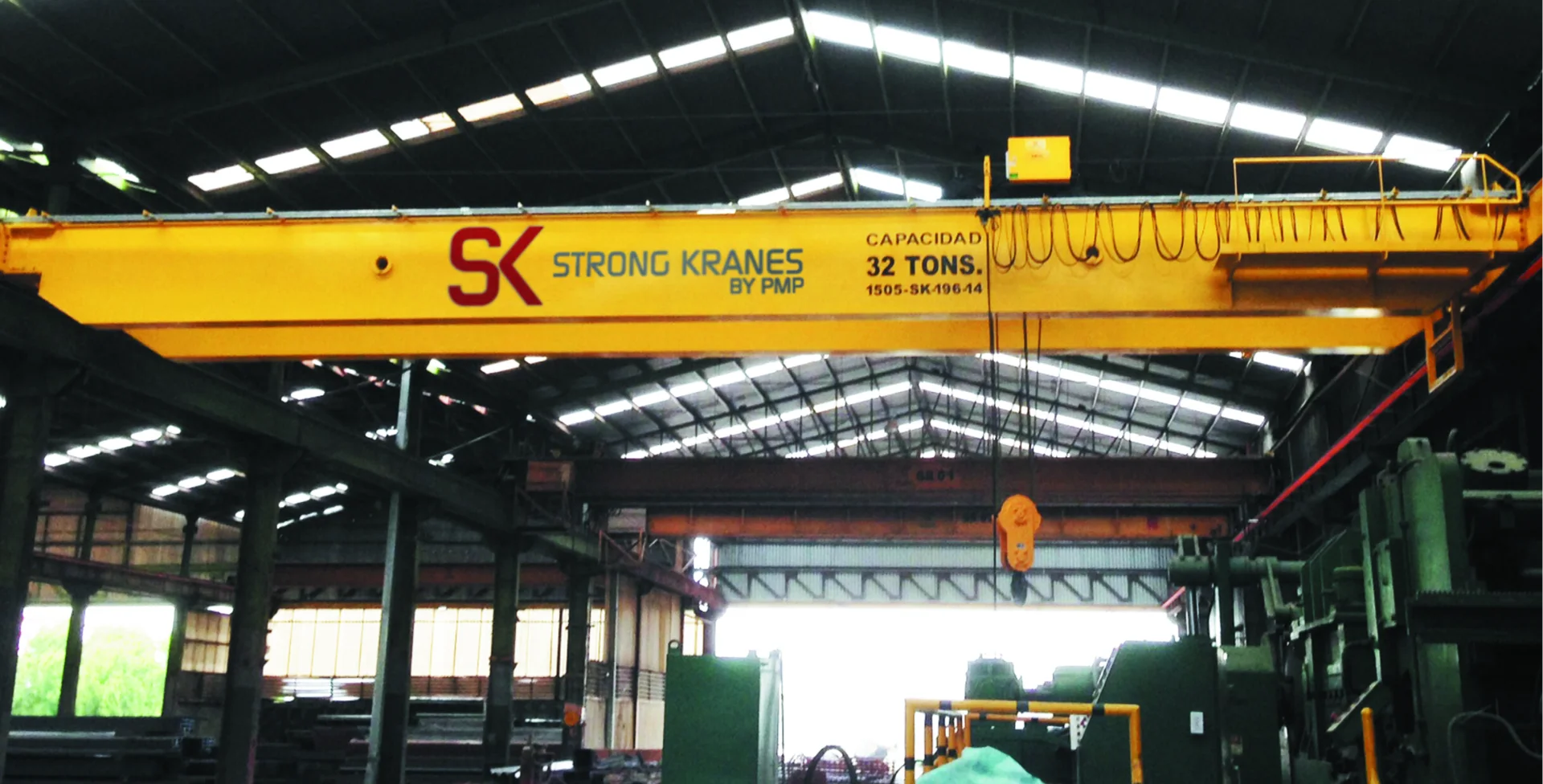
What does an industrial crane do?
Overhead cranes are designed to perform three fundamental movements within a facility:
- LiftRaise heavy loads vertically.
- TransportMove materials from one point to another within the coverage area.
- PositionPlace the load under control at the required point.
One solution can support several applications, but the best configuration depends on the actual operating conditions.
Factors to consider when selecting an industrial crane
Before determining the crane type and capacity, evaluate:
- Available height and required lifting height.
- Load weight, dimensions, and geometry.
- Ground or floor conditions.
- Clear space and potential obstructions.
- Access for installation and maintenance.
- Building dimensions and supporting structure.
- Frequency and severity of use.
- Operating and maintenance costs.
Reviewing these factors helps adapt the crane to its environment instead of selecting it based on rated capacity alone. For specialized projects, lifting engineering design can define spans, heights, speeds, and duty requirements.
Industrial crane classifications
Single-girder overhead cranes
Single-girder overhead cranes use one main beam to support the hoist that lifts the load. They are common in workshops, maintenance areas, and processes that move moderately sized parts or components.
In the applications originally described by Strong Kranes, they are generally considered when capacity does not exceed 10 tons and spans remain below 18 meters. Their compact configuration makes installation straightforward and helps maximize available headroom.
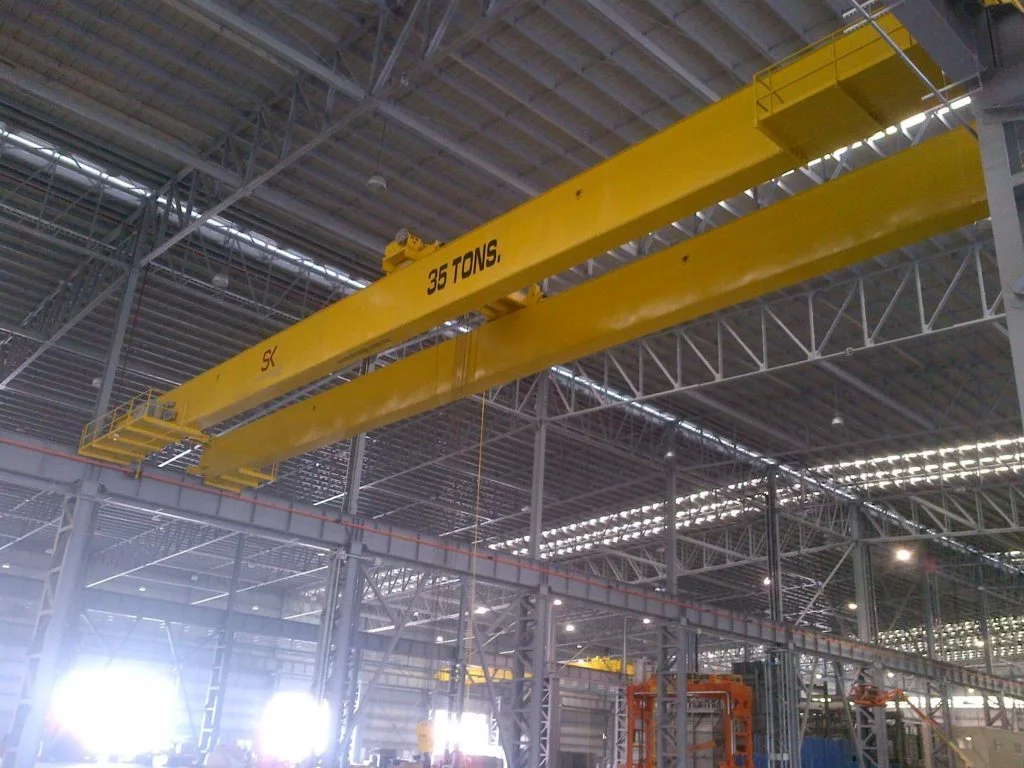
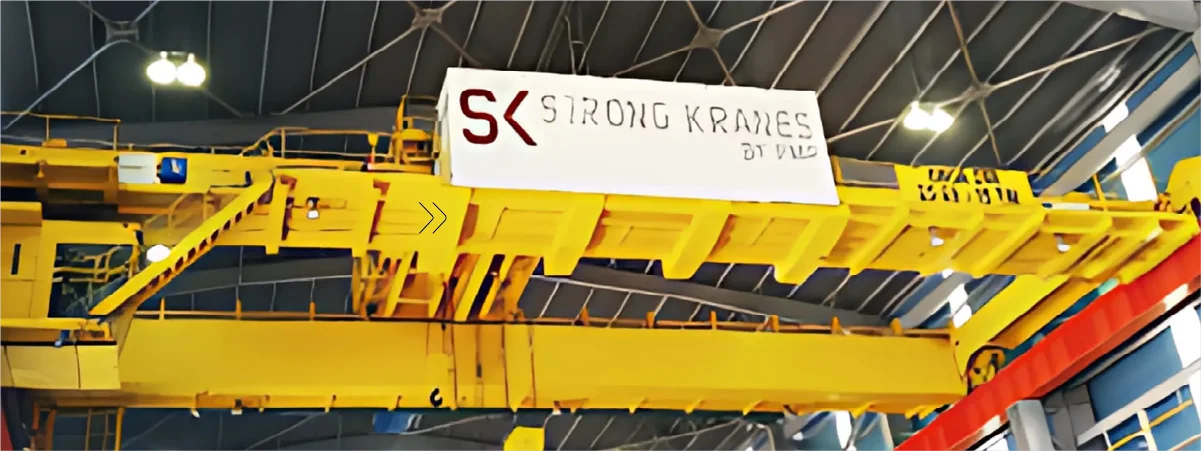
Double-girder overhead cranes
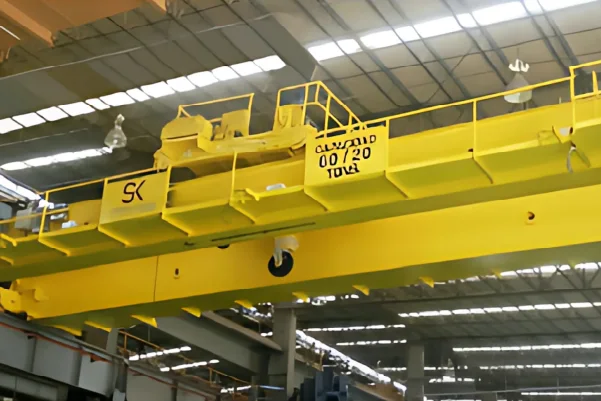
Double-girder overhead cranes use two main beams. Depending on the dimensions and duty, they can be built with structural beams or box girders. They combine higher lifting capacities with the flexibility required for wide spans and demanding industrial applications.
Workstation cranes
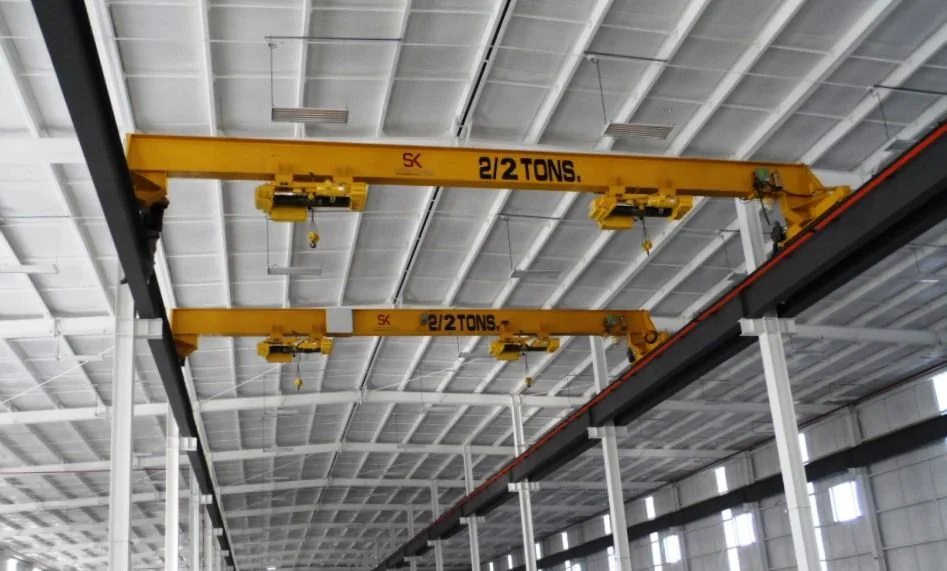
Workstation cranes are independent structures for light-duty, ergonomic handling, with capacities of up to 2 tons. They can provide manual or powered movement and, depending on the project, can be floor-mounted or suspended.
Their modular construction facilitates future modifications or relocation. In many applications, they offer an economical alternative that does not require a complex foundation.
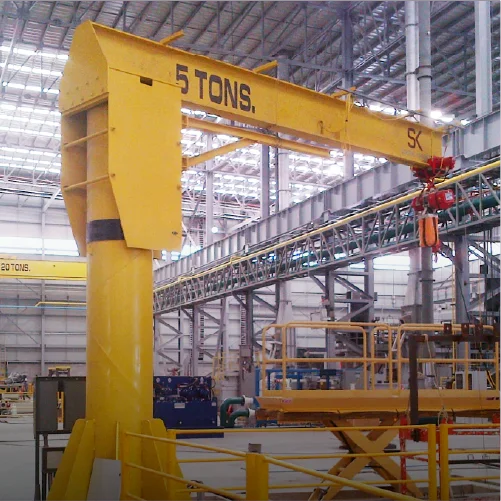
Jib cranes
Jib cranes cover a localized work area. They are used for fabrication, maintenance, component replacement, and loading or unloading molds and plates.
Configurations range from 200 kg to 5 tons, with arms up to 6 meters and options for manual or powered rotation, pendant controls, and remote control.
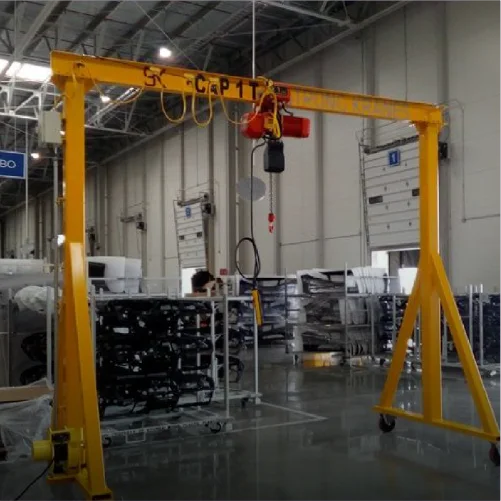
Gantry cranes
Gantry cranes move a load horizontally on a structure supported from the floor. They are frequently used outdoors or in facilities without columns and runway beams suitable for a conventional overhead crane.
Capacities start at one ton and are adapted to the project. When no elevated supporting structure exists, a gantry can provide a practical solution and reduce some structural work.
Special cranes C-F
Special cranes are engineered for conditions that demand a higher operating frequency or a purpose-built solution, including corrosive, humid, saline, or hazardous environments.
Classes C, D, E, and F represent progressively more demanding service levels, from moderate use to continuous severe service. The correct class must be based on the real duty cycle, load, and environment—not only maximum capacity.
Which crane does your project need?
The market offers many alternatives, but the best solution is the one that matches the load, space, duty cycle, and facility conditions. A technical assessment helps size the system and plan its operation and maintenance.
Strong Kranes provides integrated engineering, manufacturing, and supply solutions for custom overhead cranes. You can also review our frequent and periodic crane inspection service to assess the condition of existing equipment.