Service scope
Overhead crane inspection services
Specialized assessment of actual equipment condition
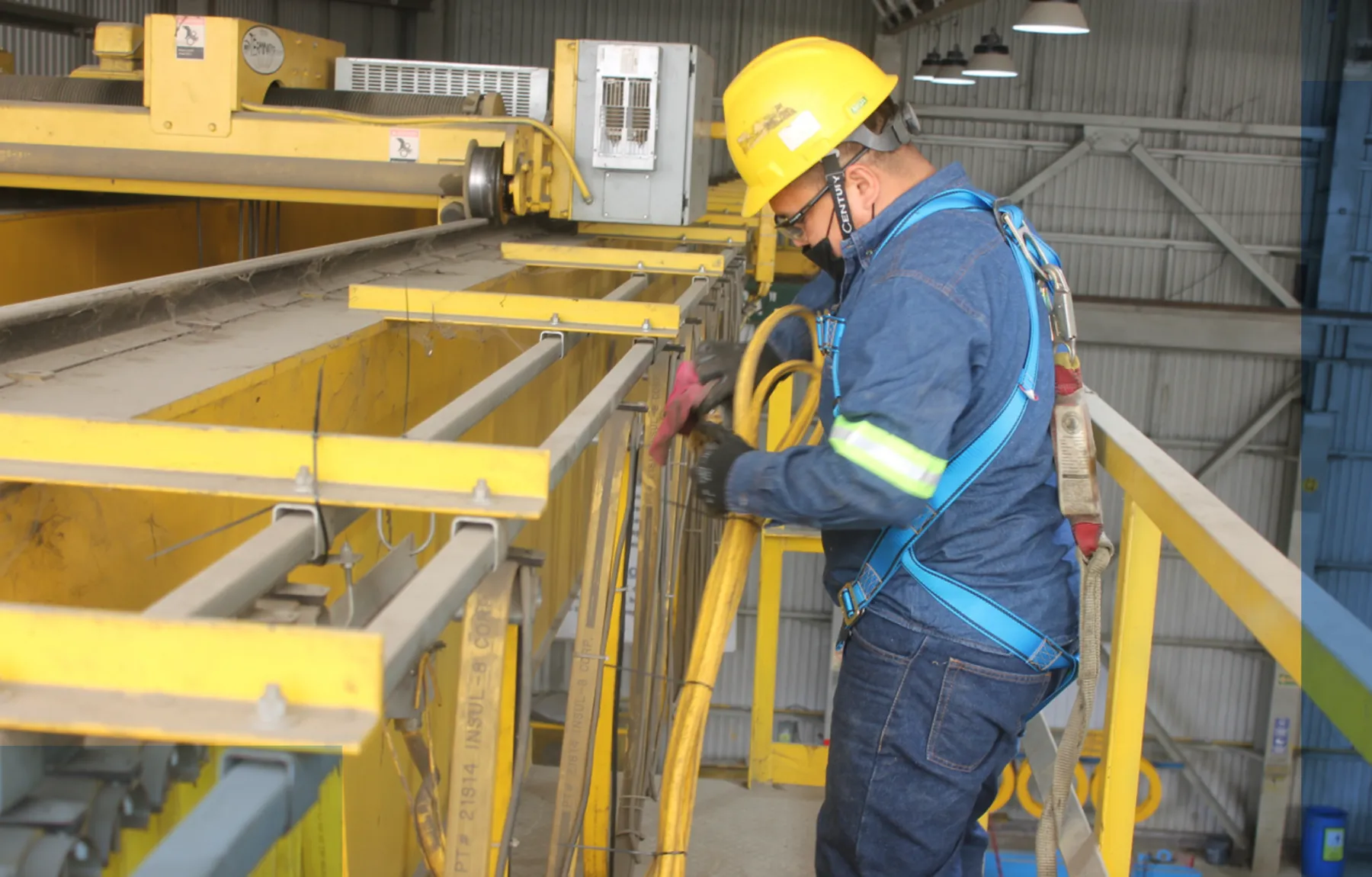
Strong Kranes performs frequent and periodic inspections of overhead cranes of different brands, capacities, and configurations. The visual, functional, and mechanical assessment identifies wear, damage, deformation, faults, and abnormal conditions before they lead to a major failure, unplanned downtime, or an operating risk.
When equipment condition and the agreed scope require it, we perform specific measurements and tests. Each finding is supported by technical and photographic evidence so the customer can schedule maintenance, budget repairs, and make informed decisions about continued crane operation.
Inspection scope
Depending on crane type and condition, the service may include:
- Identification of the crane and its characteristics.
- Visual inspection of the bridge, structure, end trucks, and visible runway rail conditions.
- Review of the hoist, trolley, hook, hook block, wire rope, and fastening elements.
- Inspection of drums, sheaves, rope guides, brakes, wheels, and travel components.
- Review of motors, gearmotors, electrification systems, panels, and electrical components.
- Review of contactors, relays, variable-frequency drives, and controls when applicable.
- Functional verification of crane motions, safety devices, and safety elements.
- Identification of leaks, wear, damage, deformation, and other abnormal conditions.
- Specific measurements or tests included in the agreed scope.
- Photographic evidence, finding classification, a technical report, and recommendations.
Activities not included by default
Unless expressly stated in the quotation, an inspection does not include mechanical, electrical, or structural repairs; welding; component replacements requiring more than one hour; wire-rope, wheel, motor, or reducer replacement; specialized nondestructive testing; certified load testing; structural engineering studies; component disassembly; or parts and material supply. Additional work is quoted separately based on the findings.
Equipment and components we inspect
We inspect single- and double-girder overhead cranes, hoists, and travel trolleys of different brands and capacities. The assessment may cover bridges, end trucks, hoists, trolleys, hooks, wire ropes, drums, sheaves, brakes, motors, gearmotors, wheels, rails, electrification, electrical panels, variable-frequency drives, controls, and safety systems.
This service is recommended for steel mills, metallurgy, foundries, manufacturing, automotive facilities, distribution centers, warehouses, machinery manufacturers, and other processes where crane load handling is critical. It is especially valuable for cranes with high operating frequency, demanding environments, a history of failures, or significant component wear.
Customer requirements
To prepare and perform the inspection, the customer should provide the following when available:
- Crane identification, capacity, brand, model, and serial number.
- Maintenance and inspection history, known faults, drawings, and technical information.
- Safe equipment access, work permits, and applicable safety orientations.
- A released work area and safe conditions for inspection and testing.
- Equipment availability during the previously scheduled hours.
One crane inspection can be completed within one workday. Final duration depends on capacity, dimensions, configuration, access, number of cranes, and required tests. Some activities require temporarily suspending operation; we coordinate downtime and area control to minimize production impact.
Report and follow-up
At completion, the customer receives a technical report that may include equipment identification, the inspection date and activities, components reviewed, results and measurements, photographic evidence, findings, priority level, and maintenance or repair recommendations.
Inspections consider manufacturer specifications, operating conditions, CMAA guidance, plant safety procedures, and, when relevant to the scope, ASME B30.2 criteria. Strong Kranes provides this service throughout Mexico, subject to logistics and site access conditions.
Information needed for a quotation
To prepare a proposal, share the number of cranes, capacities, available brand and model information, plant location, crane configuration, hoist type, requested service, known faults, preferred date, photographs, and the planned access method, such as a fixed ladder, platform, or aerial lift.